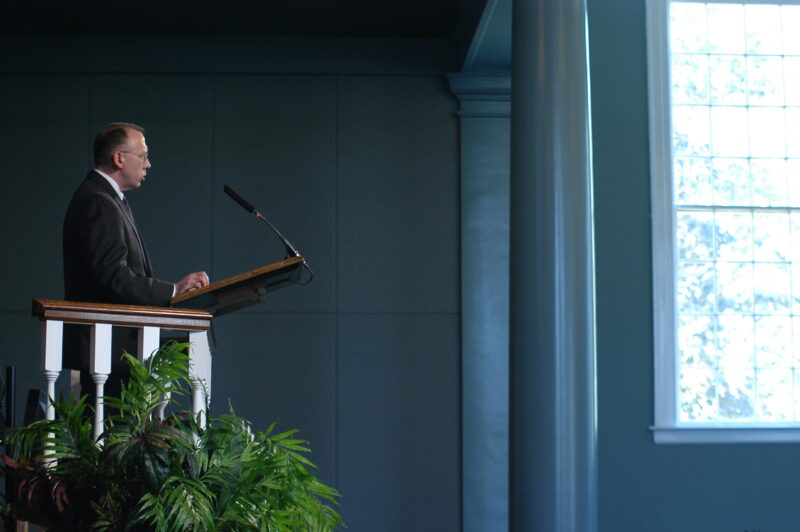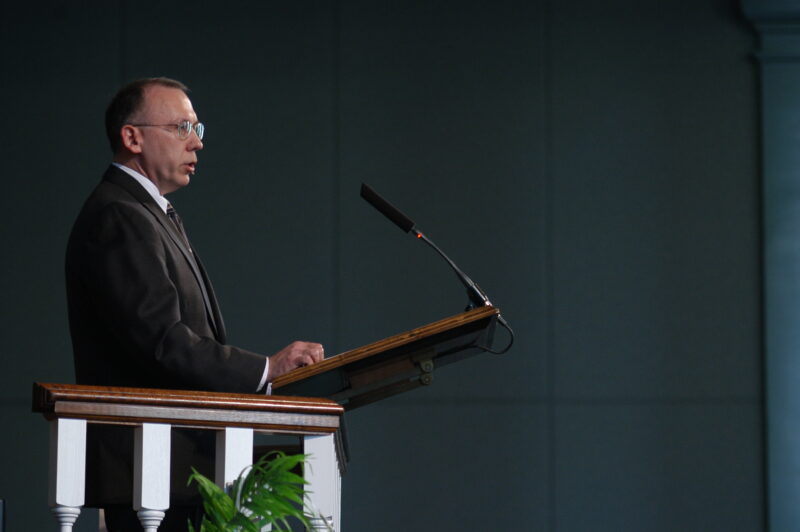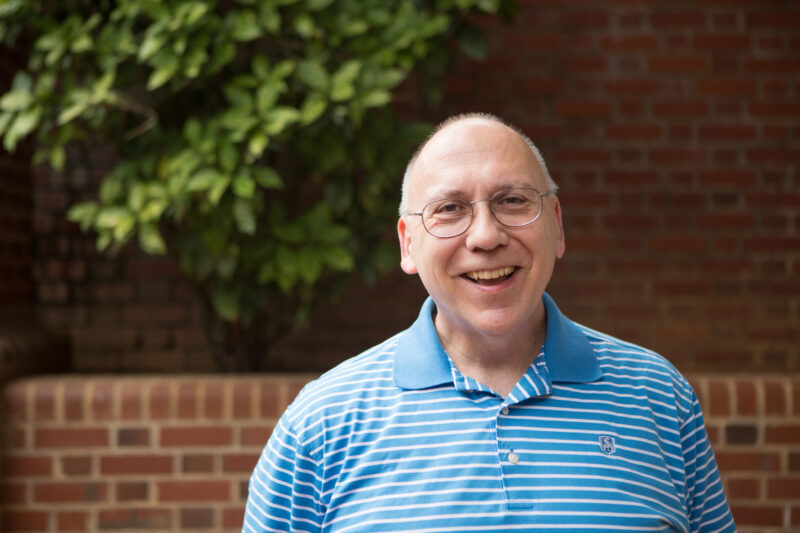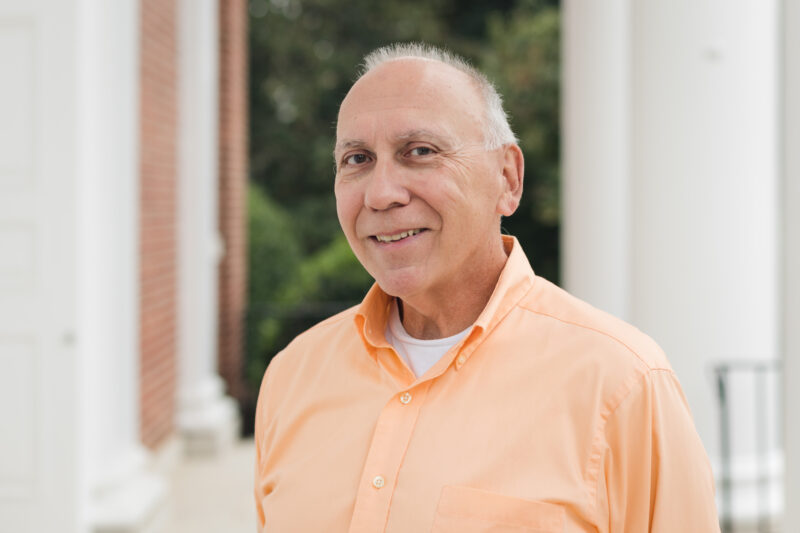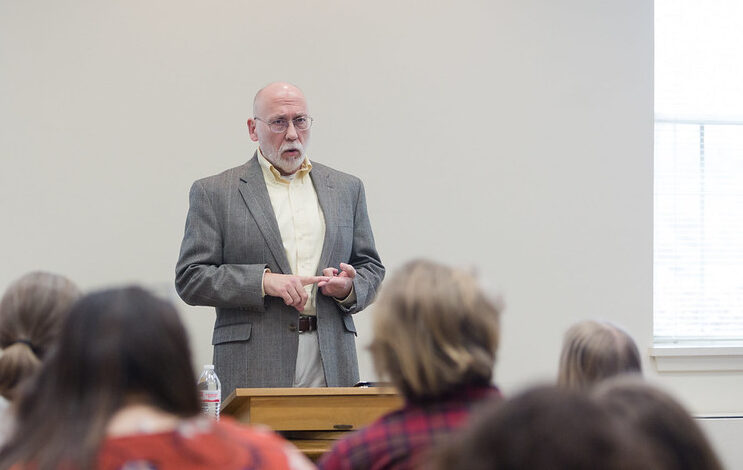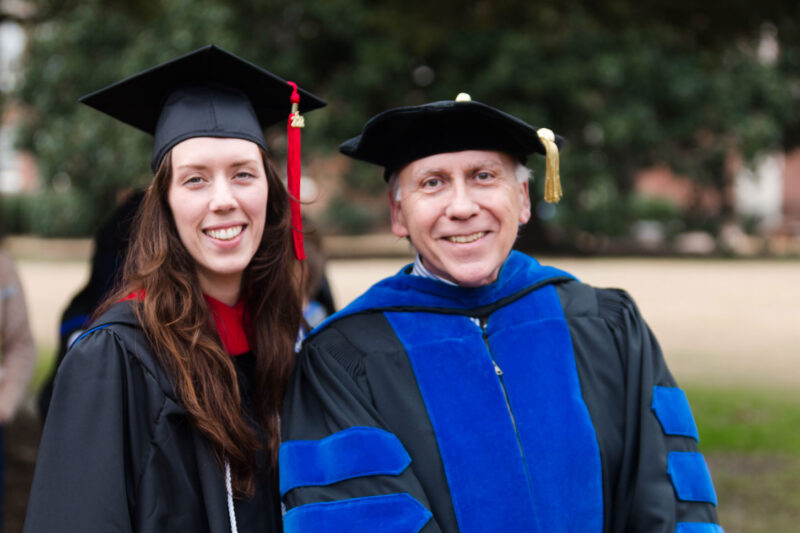
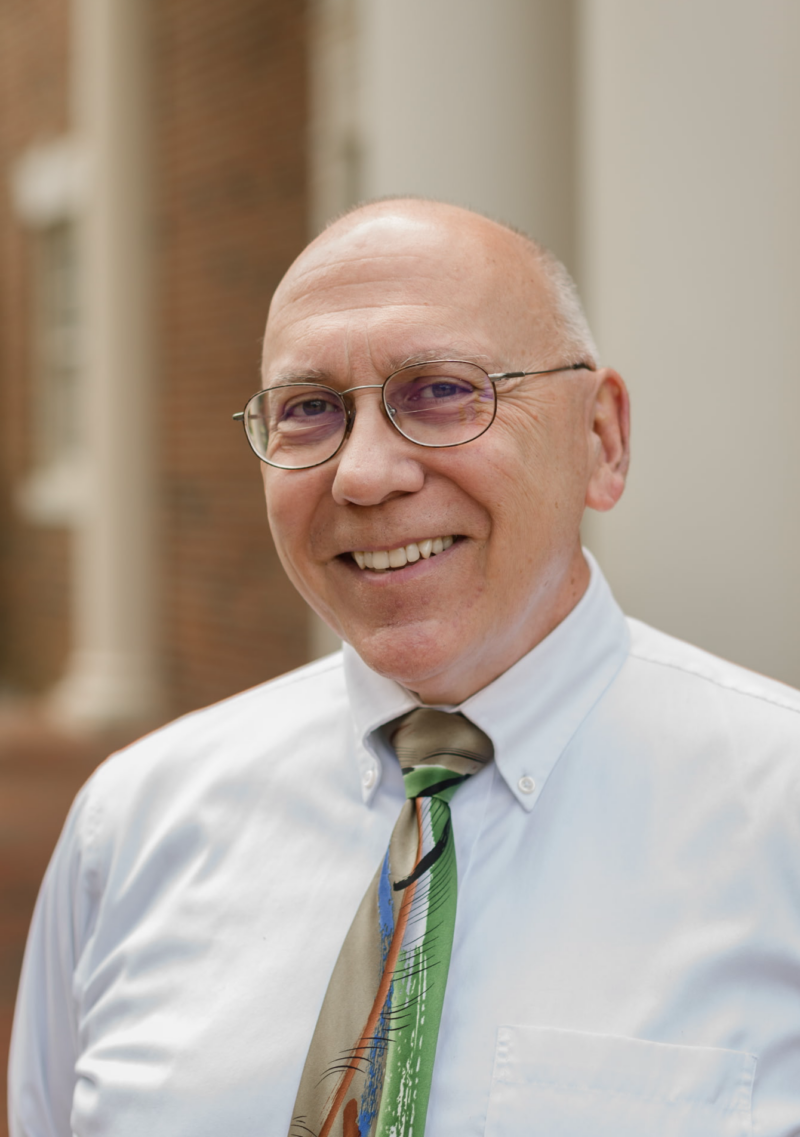
As a historian and as a professor, Keith Harper dedicated his life to telling other people’s stories. In return, it is fitting that in his death, the voices of Harper’s many students, colleagues, and friends tell his story as they testify to his profound influence on their lives.
As a historian and as a professor, Keith Harper dedicated his life to telling other people’s stories.
For 28 years, Harper served as a professor of Baptist studies at Southeastern Seminary. Before then, he taught at both Mississippi College and Emannuel Bible Insitute in Romania.
Born in Jeffersonville, Indiana, in 1957, Harper grew up not too far from the place that would eventually become like home to him: the state of Kentucky. It was in Kentucky that Harper completed his bachelor’s degree in theology at Lexington Baptist College and then went on to pursue a master’s in U.S. History at Murray State University.
Before graduating college, Harper met and married his beloved wife, Johnnie, who would remain his dearest friend and supporter over the next nearly 48 years of marriage. Their family would eventually grow to include their son, David, whom Harper would fondly refer to as his “helper man” in the acknowledgements of his books.
During these years, Harper experienced discipleship within the local church and began pursuing the work of ministry. He went on to pastor at a local church near Murray while simultaneously pursuing his master’s.
Five years later, in 1991, Harper completed a PhD at the University of Kentucky, writing his dissertation on “Southern Baptists and Social Christianity, 1890-1920.” His life-long journey as a historian, scholar, and teacher had just begun.
Harper’s love for Kentucky remained with him long after he and his family moved between states, eventually ending up in North Carolina at Southeastern. Many of his published works since have highlighted his fondness for Kentucky, examining different elements of its Baptist and religious history.
“He was particularly interested in the early Baptists in Kentucky,” reflected Jason Fowler, director of library services at Southeastern, “and he eventually wrote a book about them entitled ‘A Mere Kentucky of a Place: The Elkhorn Association and the Commonwealth’s First Baptists.’ The title came from a phrase attributed to the early Baptist Lewis Craig that heaven was ‘a mere Kentucky of a place.’”
“Passion for the Purity of the Church’s Witness”
In 1996, Harper joined the faculty at Southeastern as an assistant professor of Church history.
Though his focus would turn primarily to teaching in the classroom, his love for the local church remained, and he continued to serve in pastoral roles over the coming years.
Walter Strickland, associate professor of systematic and contextual theology at Southeastern, noted that Harper’s “keen mind and warm-hearted scholarship emerged from a passion for the purity of the church’s witness to God’s kingdom.”
Harper’s heart never strayed from the people of God. In his teaching, he sought the sanctification of those around him and remained a consummate encourager. As one student remembered, in a class focusing on Baptist history, Harper assigned a textbook on spiritual development, which he viewed as paramount in importance.
In a written tribute to Harper, two of his friends and colleagues, Nathan Finn and Keith Whitfield, reflected on the way his love for Christ and the local church informed the way he taught history.
“What drove all of this,” they explained, “was his belief in the Gospel and its power to transform. That’s what he most wanted — for people to be conformed to the image of Christ and to walk faithfully in the callings God has given them. He understood that history is complicated, and it deserves to be represented truthfully, even when believers have fallen short. But he also believed the Gospel reminds us of the way things ought to be — and, by God’s grace, one day will be.”
That’s what he most wanted — for people to be conformed to the image of Christ and to walk faithfully in the callings God has given them.
“Office Hours,” Conversations, and Encouragement
In the midst of his extensive reading and writing, Harper regularly visited the Southeastern Library, which became known as his favorite haunt.
“[He] was a friend to librarians and archivists,” said Fowler. “He loved research, and he was constantly on the lookout for new-to-him research material. He would call anyone and everyone who could provide him with resources to better understand Baptist life in America. And in exchange, he regaled us with his humor and praised us beyond what our efforts to help him deserved.”
Harper was a prolific researcher and writer, contributing to countless scholarly conversations over the years, and he highly valued the relationships he made with fellow historians and scholars.
However, he didn’t simply spend time with the professionals; he was just as often spotted chatting with students.
“His ‘office hours’ were as likely to take place in the library or hallway as they were in his office,” Finn and Whitfield recalled. “There, he offered encouragement, stories from Baptist history, well-timed sarcasm and the occasional not-so-gentle nudge to finish the dissertation or apply for that degree. He cared about your work because he cared about your calling.”
And taking one of Harper’s classes wasn’t a prerequisite for receiving his care and investment. Bradley Eaves, associate director of the Equip Network, noted that Harper “may have had more influence on students he never taught than any other professor I’ve ever met. The number of students who will say they never had a class with him, but he was nonetheless massively influential in their lives is immense. I’m grateful to be among them.”
Eaves’ own testimony is bountifully supported by the first-person accounts of other students — many of them women.
A Faithful Advocate for Others
During a time when it was uncommon for women to receive a conservative biblical and theological education, Harper determined to act as an advocate for women in seminary and support their academic endeavors.
One such student who experienced Harper’s encouragement was Anna Daub, who currently serves as assistant professor of missions at Southeastern.
“I didn’t meet Dr. Harper until after I had entered my PhD program,” she recalled. “I had no classes with him. Yet this man was so impactful to my academic journey. He made time for me to chat with him often. He and I would discuss little tidbits he had discovered about Christian history that related to my field. And he encouraged me to learn to read and write better and just to keep trekking, even when it got hard. He valued my gifts and scholarship and encouraged me to see I had something to add to the conversation.”
Another Southeastern alumna, Amy Whitfield, recalled Harper’s purposeful investment in her life:
“My path was significantly shaped by the influence and encouragement of Keith Harper,” she said. “He saw what I was capable of before I could see it, and he would not let me give up. His historical mind could only be described as brilliant, and he leaves a body of work that will serve Baptists long into the future. But the scores of men and women who call him a mentor — that’s his legacy.”
His historical mind could only be described as brilliant, and he leaves a body of work that will serve Baptists long into the future. But the scores of men and women who call him a mentor — that’s his legacy.
In fact, Harper and Amy Whitfield went on to coauthor and publish the book “SBC FAQ’s: A Ready Reference.” It wasn’t uncommon for Harper to write alongside his students or mentees. He regularly used his own academic experience and relationships to help promote and further the work of others.
As Finn and Keith Whitfield so fittingly described, “Yet for all his accomplishments in print, it’s his investment in people that defines his legacy. He mentored widely — often informally, always intentionally. Ask anyone who studied under him or walked the halls alongside him, and they’ll tell you: he saw potential in others before they saw it in themselves. He believed in his students. He believed in scholarship. He wanted students to believe that scholarship mattered for faithful ministry.”
The Journey Home
Harper retired from teaching at Southeastern in July of 2024, 28 years after he arrived. Around this time, Harper learned that his body was fighting stage 4 lung cancer and that the road ahead of him, over the next however many months or years, would look very different.
He and Johnnie decided to move down to Greer, South Carolina, to be near their son, David, and his wife, Alexa. Harper and Johnnie also joined Greer First Baptist Church where he began a discipleship class and started serving that church body.
In the midst of it all, Harper also continued his research.
Since 2022, he and two research assistants, Josh Pruitt and Faith Steele, had been working on an account of Southeastern’s 75-year history. Pruitt and Steele, both mentees of Harper, were promoted to the position of co-authors during the multi-year process, and over the course of the next ten months, the three of them continued pursuing their project with zeal.
In spring of 2025, Harper’s illness took a turn for the worse, and yet he kept on doing what he always did. In the weeks leading up to his death on April 23, he was still working on the book, messaging fellow scholars, and speaking with friends over the phone.
Southeastern President Danny Akin, recalled his conversation with Harper on April 18, Good Friday:
“I always enjoyed our many conversations about all things Baptist,” he said. “My last conversation with him included a brief debate on whether we would study Church and Baptist history in heaven. I was certain we would. He was more unsure. Well, now he knows! I will greatly miss Keith Harper, but I gain great comfort in the gospel promise that we will see one another again.”
In his passing, Harper entered everlasting life with his Savior, having endured in faithfulness and in hope until the end. He has left in his place a multitude of believers who, because of his influence and investment in their lives, have a deeper understanding and love for their history, for their Church, and for their God.
He has left in his place a multitude of believers who, because of his influence and investment in their lives, have a deeper understanding and love for their history, for their Church, and for their God.
On April 29, friends, family, and colleagues joined Johnnie and David at First Baptist Greer for a funeral service honoring Harper. His body will later be interred in Kentucky — the state where he made his start as a historian.