Beyond the Book with Dr. Keathley: “Faith and Science”
Mary Asta Mountain | September 11, 2024

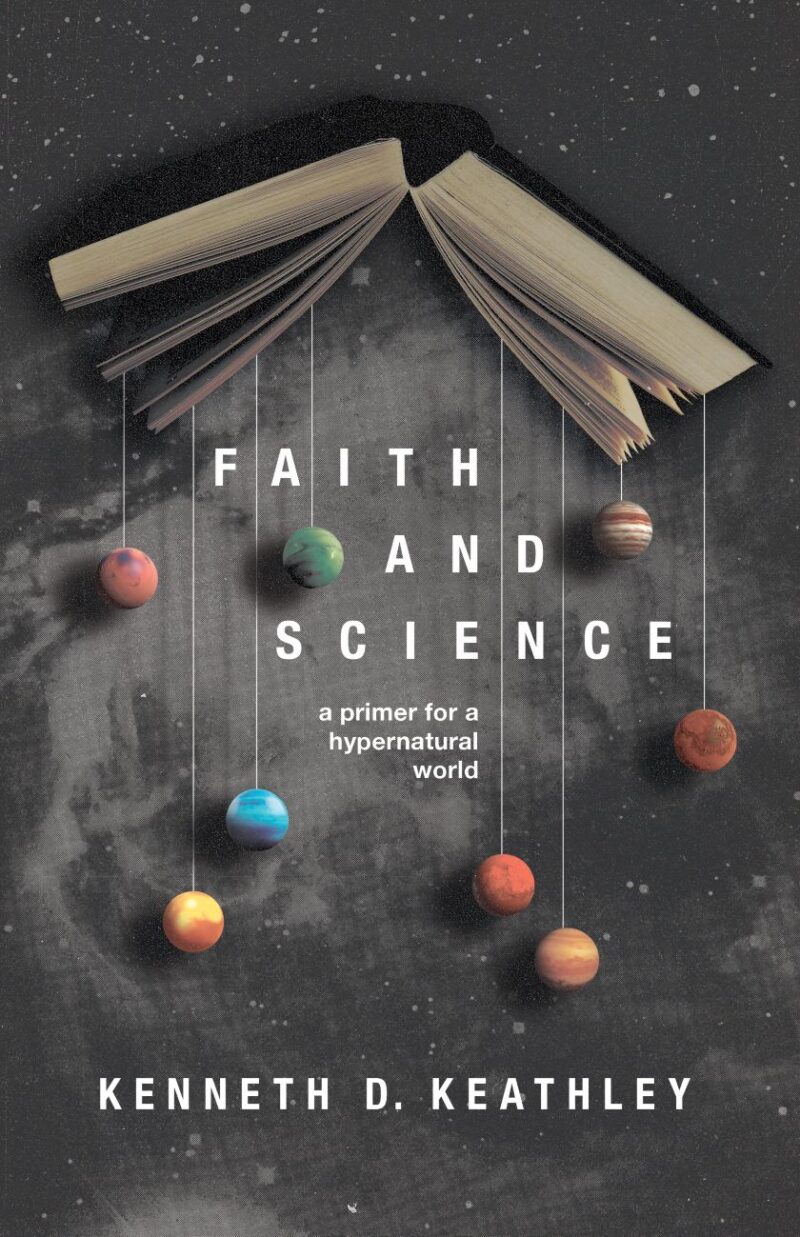
In today’s society, it is common to view science and the Christian faith as incompatible, unable to be reconciled with one another. Kenneth Keathley, research professor of theology at Southeastern Seminary, addresses this position in his newly released book “Faith and Science: A Primer for a Hypernatural World.” He argues that scientific inquiry and faith are, in fact, compatible and should not be separated from one another; when integrated, they present a robust worldview of God and his creation.
Check out the following Q&A in which Keathley takes some time to answer a few questions about his new book.
What is the purpose of this book, and who is its target audience?
I wrote “Faith and Science” with high school and college students in mind, particularly those interested in the STEM (Science, Technology, Engineering, and Mathematics) fields. I hope pastors and youth pastors will find it to be a helpful resource for them.
What motivated you to write “Faith and Science”?
This book is part of the “Christ in Everything” series by B&H, of which our own Dr. Benjamin Quinn is the editor. It’s important that the Church demonstrates Christ’s lordship over every arena of life — including the natural sciences.
It’s important that the Church demonstrates Christ’s lordship over every arena of life — including the natural sciences.
How does Christianity offer a more comprehensive worldview than either scientism or fideism?
Scientism (which claims that science, and only science, can answer all the important questions of life) is a blinkered way to see the world. It is self-refuting, since scientism cannot be empirically proven by science. Fideism would cause scientific progress to grind to a halt, since it argues that, in the end, everything must be taken by blind faith.
What preconceptions must Christians challenge in order to begin integrating their faith with their understanding of science?
Some opponents of the Christian faith argue for the “warfare model” — the notion that Christianity and science are always in conflict. Historians of science demonstrate repeatedly that the relationship is much more fruitful and symbiotic.
Historians of science demonstrate repeatedly that the relationship is much more fruitful and symbiotic.
How is the intersection of faith and science a matter of wonder and not just data?
Even nonbelieving scientists typically express awe when they contemplate the created order. This is no surprise, since “the heavens declare the glory of God; and the firmament shows his handiwork” (Ps. 19:1, NKJV).
Why is it so important for Christians to engage with the STEM world?
Because the STEM world is such an important mission field. Worldwide there are 8.8 million scientists, 7.5 million engineers, and 27 million software developers. Throughout the world, the best and brightest minds are entering the STEM fields, with over 10 million STEM graduates every year. And those involved in the STEM fields have a profound impact on culture.
What mindset should readers have when approaching this book?
I hope they will approach it with openness, curiosity, and a desire to see the hand of the Creator in what he created.
How does this book equip readers to serve the church and fulfill the Great Commission?
I hope this book will encourage believers who are entering the STEM fields to do so to the glory of our Savior and that it will also remove scientific obstacles that interested nonbelievers might have.
How has researching and writing “Faith and Science” shaped you spiritually?
More than ever, I’m convinced that the God who created the heavens and the earth revealed himself to us through his Son, Jesus Christ.
"Faith and Science"
In “Faith and Science: A Primer for a Hypernatural World,” Kenneth Keathley argues that, rather than acting as opposing forces, scientific inquiry and the Christian faith go hand-in-hand.
In his mission to offer a fully integrated theology of science, Keathley begins with the Lordship of Christ and the sufficiency of Scripture. He characterizes the study of science as a providential gift and a worthy vocation with Christian origins. Keathley then examines the twin challenges of scientism and fideism, observing their deficiencies as comprehensive worldviews. After defending Galileo as a scientist-theologian, Keathley offers readers a model for how to integrate their Christian faith with their scientific pursuits.
“Faith and Science” provides a ready primer for students and everyday Christians to challenge their preconceptions about faith and science and to develop a more robust worldview to guide their examinations of our hypernatural world.
The Christ in Everything series exists to demonstrate how Christ is connected to all of life. The primers in this series serve as introductions to important cultural topics, including science, freedom, politics, beauty, and the nature of truth. Each book offers a biblical and theological framework from which to view and approach the topic at hand, followed by examples for how to walk in the way of Jesus in that cultural domain.