
Go Make Disciples: Cultivating Women’s Ministry
Mary Asta Mountain | October 29, 2024

When Rachel Lambert began her master’s in biblical counseling at Southeastern Seminary, she never dreamed of leading women’s ministry. It was much more comfortable to follow the lead of others and, if she could, defer to the other voices in the room. Deep down she was convinced: Couldn’t she serve her church behind-the-scenes from a position of support just as well as from one of influence?
During an introduction to ethics course at Southeastern with Mark Liederbach, however, Rachel soon discovered that her own voice had much to contribute.
“I want to pose a scenario to you,” Liederbach would say to his class. “A woman approaches you. She has experienced sexual assault and is now pregnant and considering an abortion. She is in deep distress. How would you respond to her?”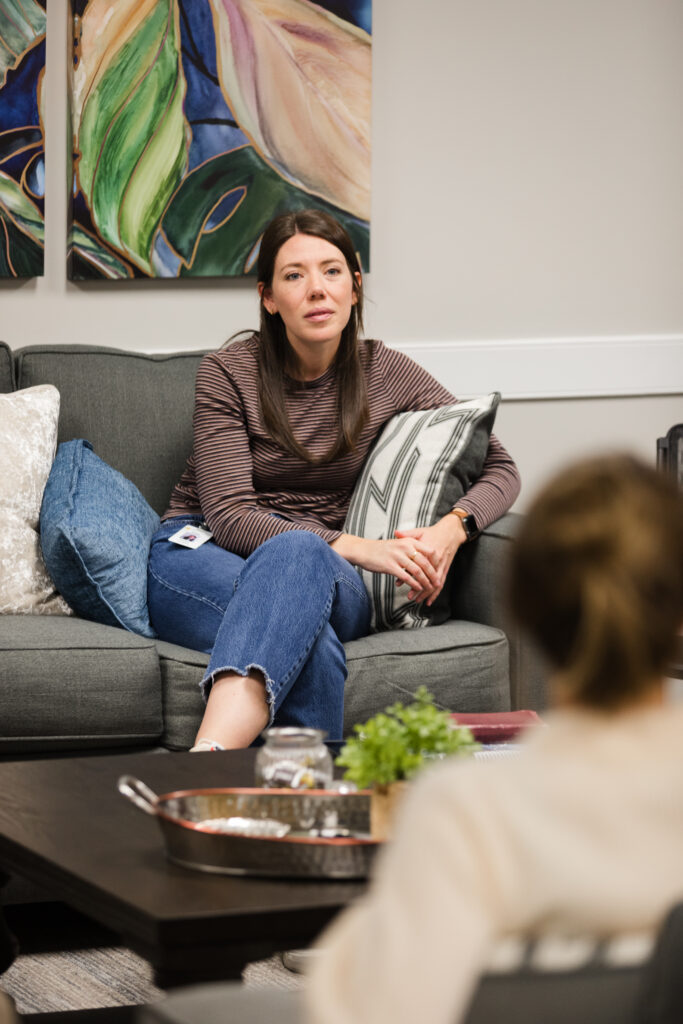
Before anyone in the class could answer, Liederbach gave a caveat. He wanted the men in the room to wait, listen, and hear how the female students would respond. As the women gave their answers, there was a general consensus. In the way that God tells us to mourn with those who mourn, they would hug her, they would cry with her, and they would listen to her before counseling her. In that situation of deep vulnerability, the women in class felt that while it was imperative to point their friend to what Scripture says about unborn life, it was just as important to show her that God grieved with her in her pain.
There were times in class when Liederbach would call directly on quiet Rachel and ask her what her response would be to a specific question or problem. Though speaking up went against everything in her nature, it was in moments like these, that God began to stir something in Rachel’s heart.
“I remember being encouraged,” Rachel reflected, “because I realized, ‘He’s helping train pastors, and he’s modeling for them the importance of listening to the voices of women in their congregations. He’s showing them, ‘Here’s where it’s important to stop and listen to a woman and her experience so you’re able to shepherd her in her hurt before jumping to fix the situation.’”
Moreover, she said, “When Dr. Liederbach called on me in class to give an answer, “it helped me see that he wanted to hear from me — that I have something to say, and it’s important. Even that, in a small way, was helping grow some of my confidence.”
Rachel’s initial understanding of ministry was spot on. Serving quietly as a faithful member of a church was just as valuable as working with a title. This conviction would actually guide and define her approach to ministry over the coming years. However, through Rachel’s time at Southeastern and through the discipleship of Christians in the local church, God began to mold and prepare her for a more public position of ministry: mobilizing and encouraging those very people serving faithfully behind the scenes, specifically the women in her church.
The Freedom of the Gospel
Growing up in the church and experiencing discipleship from her parents, Rachel believed that Jesus had died for her sins. But as a young girl, she struggled to understand the truth of the gospel.
Rachel explained, “I think I really internalized the idea that ‘I’m a really good person, and I do good things. I don’t need a lot of help’ — at least until I made a mistake, and then I felt massive guilt because it didn’t make sense in my mind. If I’m a good person, why would I do that?”
Rachel was sixteen years old, attending Faith Baptist in Youngsville, when a local student from Southeastern Seminary took her Sunday school class through a Bible study in Romans. The student, a woman named Melissa, intentionally sought to disciple Rachel and help her consider her beliefs more deeply. Reflecting on that time, Rachel remembered the profound work that God began in her heart.
“Reading and studying through Romans changed me and gave me an understanding of the gospel in a way that actually began to change how I lived and interacted with people,” she said. “I remember thinking, ‘This is freedom; understanding this is actual freedom.’ And I felt free from performance and the guilt of sin. I think that’s partly where my passion for discipleship in the church comes from.”
I felt free from performance and the guilt of sin. I think that’s partly where my passion for discipleship in the church comes from.
An Awakened Love for Discipleship
As Rachel entered college, God brought more people into her life who would faithfully encourage her walk with the Lord. One dear couple from her local church sat down with her and encouraged her to go on a mission trip the summer of her freshman year. They felt it was so important that they were willing to pay the full cost.
Struck by their sincerity and generosity, Rachel took their advice and went. She discovered that they were absolutely right. That trip set the tone for the rest of Rachel’s college years.
After returning that fall, Rachel led a Bible study for freshman girls, and this experience awakened in her heart a love for personal discipleship and ministry which she pursued over the next several years.
When Rachel entered her senior year of college, she met a woman named Mary Wallace, who took young Rachel under her wing and guided her through the process of raising support for a two-year internship with college ministry—one year on campus and one year overseas.
Building a Framework
Mary Wallace had a deep impact on Rachel’s life. Not long after Rachel left to go overseas, Mary Wallace became director of women’s discipleship at Providence, a church 30 minutes from Southeastern.
Upon Rachel’s return and acceptance into Southeastern, she became a member at Providence, excited to once again learn under Mary Wallace. Eventually, Rachel joined the women’s leadership team and began juggling school and ministry at the same time. It was not always easy, but God began to show Rachel how the two went hand in hand.
“As I was taking in information in class, I had people I was thinking about,” Rachel explained. “Or even with the books I was reading, I remember photocopying chapters from them to send to girls who were in my life-group. And I would say, ‘Hey, read this. Can we talk about this?’”
Classes with professors like Tracy McKenzie, Chuck Lawless, and Sam Williams helped give Rachel a comprehensive understanding of the narrative of Scripture and the role that God’s people play in it.
“Counseling, especially, gave me a framework to think about people and helped make sense of the things that I was encountering in ministry,” Rachel recalled. “Instead of putting band aids on things, I have learned to give space for people to ask questions, especially the hard questions of life. And then to direct them back to the Bible, to ask, ‘What do we see? What do we see God doing? What is he making?’”
Counseling, especially, gave me a framework to think about people and helped make sense of the things that I was encountering in ministry.
As Rachel served in the life of her church, she began to meet and learn from members who had been serving in humble, unassuming ways for many years. Without a seminary education or aspirations for attention, these men and women committed themselves to the work of the Lord, to encourage and disciple his people and to serve their local church with the unique gifts God had given them.
Partway through her counseling degree, Rachel began to realize that clinical, one-on-one counseling was not the route she wanted to go. Her heart longed for intentional relationships where she could remain involved in a person’s life throughout the week. It was discouraging, at first, to think that all of her schoolwork had seemingly been building to nothing.
However, God soon showed Rachel that all of it was important and that none of it was wasted. Though she might not use her degree to pursue a professional career, Rachel realized she would and could use it every day in service of the local church.
She decided, “I want to be like the women in my church who are set on making disciples, no matter their role, what matter their job. That’s their sole focus in life.”
A Position of Mobilizing and Equipping
Two and a half years ago, Mary Wallace retired from her position in leadership, and in her stead, she recommended that Rachel become director of women’s discipleship. God was once again nudging Rachel outside of her comfort zone; and for a while, she pushed back.
However, after much prayer and consideration as well as counsel from both her pastor and Mary Wallace, she decided that this was the role God was calling her to fill.
In her position, Rachel helps equip and mobilize the women at Providence to go and make disciples. She also comes alongside her pastors to help them as they consider different areas of ministry within the church and how women are being encouraged and equipped in their walk with the Lord.
One unique way Rachel serves is through recognizing the unseen efforts of others and by encouraging the gifts of those around her.
“There are many women at Providence who are a wealth of godly wisdom and gifted teachers,” Rachel explained, “and I love getting to platform them for our other women to learn from.”
“It is a privilege that I get to do ministry full time and support myself, but it is not the end all be all. There is so much ministry to be done, whether your role or your title reflects that,” shared Rachel. “I’ve been able to see God do good ministry through my time in this role, but I wouldn’t say it’s better than the ministry that I was able to participate in before by simply being a faithful member of the church and wanting to serve.”
“When I think about who I want to be when I’m 80 or 85,” she expressed, “I pray that I would be humble enough to take the low places and serve wherever God has me.”
When I think about who I want to be when I’m 80 or 85, I pray that I would be humble enough to take the low places and serve wherever God has me.
Thinking back on her younger self and the uncertainty and discouragement she felt trying to understand her calling, Rachel is thankful for the way that God has guided her through each moment and doubt, using her time at Southeastern to prepare her for ministry wherever he calls her.
“God works out the details,” she said, “and he has made clear what our role is: to make disciples. And he’s given us an avenue to do that: through the church. So, identify your gifts, and raise your hand to say, ‘Use me. I’m here!’”
Join us in praying for Rachel and for her perseverance in ministry as she continues to seek to love others well and point them to Christ. Pray also for the women she serves at Providence church, that they would love the Lord with all their heart, mind, and soul, and that their love for God would move them to action in their walk with others and in their daily life.