
Beyond the Book with Dr. Hambrick: “False Love” and “True Betrayal”
Mary Asta Mountain | August 11, 2025

What are the first steps that a married couple should take in the aftermath of infidelity? And how should the church come alongside them in such a difficult season? Brad Hambrick, assistant professor of biblical counseling at Southeastern Seminary, carefully and compassionately addresses this situation in his two new publications, “False Love” and “True Betrayal.” As resources within the Church-Based Counseling series, “False Love” and “True Betrayal” equip churches and individuals to walk through a 9-step process of recovery and restoration following the devastating effects of sexual sin.
In the following Q&A, Hambrick takes a moment to answer some questions about these two books and to address his readers.
Who are these books for, and how are they best used?
For the pastor or counselor, especially those who feel inexperienced at working with marital crises, these books are an opportunity to co-counsel with me. “False Love” and “True Betrayal” provide a fully outlined “treatment plan” with assessments, Bible studies, and other homework. There are free videos (bradhambrick.com/falselove and bradhambrick.com/truebetrayal) where I help orient the couple to that section’s content.
For the couple in crisis, take it one page at a time. Everything in your life feels chaotic, staccato, and rushed. Nothing is orderly or predictable. Allow “False Love” and “True Betrayal” to introduce some order and intentionality to the chaos. Trust the process and faithfully do the work that can help you accomplish what can be done at each phase in your journey.
Allow “False Love” and “True Betrayal” to introduce some order and intentionality to the chaos.
What is the value of going through these books with a group instead of on one’s own?
In a simple phrase, “You are not alone.” When home feels chaotic but bills must be paid, schedules must be kept, and everyone else in your life is living as if nothing happened, you start to feel painfully alone. You think you’re the only one. You know you’re not, but especially if your spouse is uncooperative, a group can be a great place to tangibly sense that you’re not alone.
Another benefit emerges at the end of your journey. Many people, when they recover from the crisis, look back and realize how few resources there are. They want to be part of solving that problem but they’re not sure how. If you used “False Love” and/or “True Betrayal” to help you, then you’ve already done most of the work necessary to start a ministry at your church. Just read “Facilitating Counseling Groups” (New Growth Press, 2022), and you’re ready to launch a group-based counseling ministry.
Why is it important for local churches to be equipped to counsel and come alongside those walking through the hardship of sexual sin or betrayal?
For the life challenges we (as churches) never name or don’t address, we communicate an awful message: “God doesn’t see you and Jesus has nothing for you.” Adultery and sexual addiction are far too common to go unnamed in our churches. Conservative estimates indicate that 25-40% of marriages experience infidelity. That doesn’t include the impact of pornography.
Adultery and sexual addiction are far too common to go unnamed in our churches.
Imagine being in church, your marriage is in crisis, and you’ve never heard a next step for what a couple would do if one spouse was unfaithful (adultery or pornography). “False Love” and “True Betrayal” give pastors the tools to come alongside these couples. More than that, they give pastors the tools to raise up couples who, after experiencing restoration in their own relationships, can care for others suffering from infidelity.
What advice would you give a reader approaching these books for help for the first time?
For the pastor or counselor, stay one step ahead. You don’t have to master the entire content of “False Love” or “True Betrayal” to use these resources effectively. These books use 9-step models of change. Each step is broken into smaller parts. The first time you use these books, if you’re one unit ahead of the couple you’re caring for, you’re in good shape.
For the couple in crisis, don’t rush. “False Love” and “True Betrayal” are not books you read for understanding. They are books you read for application and implementation. Take the time to do the work, complete the exercises, gather the information, and have the conversations described in each step. Early in your journey, you may feel impatient with this approach. Later in your journey, you’ll be grateful you did it that way.
What advice would you give a friend or a leader who is supporting someone working through these books?
This may be the slowest set of books I’ve ever written. It’s been over 13 years from the start of this project to its publication. That means I’ve had the chance to see many friends and pastors use this material, in its incipient forms, to care for couples in crisis.
Based on those experiences, my advice would be: don’t underestimate the value of a companion. Many people get intimidated by the idea of caring for a couple in crisis. They fear not having all the answers. Allow “False Love” and “True Betrayal” to carry the weight of guidance. You be the person that breaks the suffocating effect of isolation that makes a crisis so much more painful.
You be the person that breaks the suffocating effect of isolation that makes a crisis so much more painful.
The topics of these books are closely related. Can “False Love” and “True Betrayal” be used together? Do they complement each other?
Yes, these two books are designed to be used cooperatively. When both spouses are willing to engage with counseling, it works best for these two books to be used as a guide for couple’s counseling with a pastor, counselor, or mentor couple. However, each book can be used independently. A group-based setting is particularly beneficial if one spouse is unwilling to engage in counseling. It helps the cooperative spouse feel less alone and have support.
How has researching and writing “False Love” and “True Betrayal” shaped you spiritually?
I grew in my appreciation for the reality that meaningful change is a process. Honestly, even as the author, I found myself wishing the process of marital recovery could be accelerated. Out of compassion for the couple, it is a natural yearning to see the journey abbreviated.
In church circles, we commonly use the term “progressive sanctification.” That means change takes time, even when we use our Bible and rely on God. I don’t think I fully appreciated the implications of progressive sanctification for the pace of change until I wrote these books. I came to realize that not only is God far more patient than I have the capacity fathom, but sometimes God is more patient than I wish he was (in a good way).
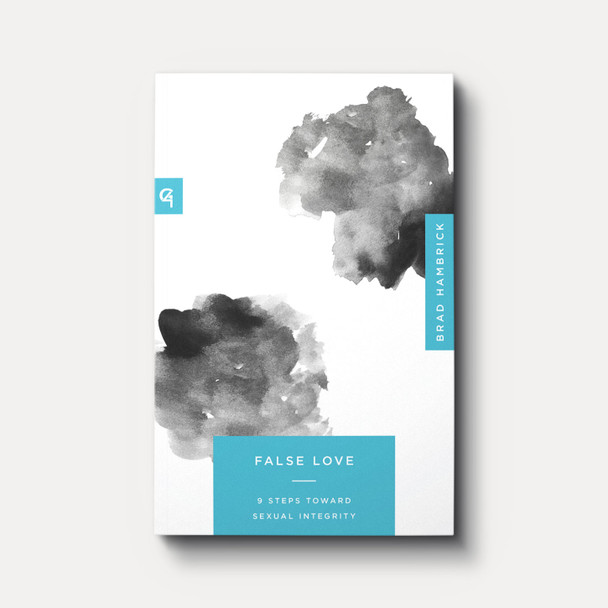
"False Love: 9 Steps Towards Sexual Integrity"
In “False Love,” counselor Brad Hambrick outlines a 9-step framework for recovery from sexual sin and invites you to experience freedom and true intimacy with God and those you love.
Nothing feels worse than being in bondage and not knowing how to get free. Many people enslaved to pornography or in an adulterous relationship know this feel all too well. Perhaps you’ve been justifying pornography use or infidelity for months or years, but now you are seeing the destruction it has caused in your life and your family’s life. If you are willing to admit that a lack of sexual integrity is disrupting your life, “False Love” will help you to reclaim your life and guide you toward healing and healthy relationships.
“False Love” is a support group curriculum that seeks to provide a safe environment for participants to grow together as they pursue steps toward lasting change. It provides a gospel-centered step-by-step process for living with sexual integrity.
- 9-step model gives gospel hope for those caught in a cycle of destructive sexual choices.
- In depth resource for churches and individuals to use for sexual addiction support groups.
- A resource in the Church-Based Counseling series, built on the G4 model of subject-specific, lay-led counseling groups, designed to help churches create sustainable lay counseling ministries.
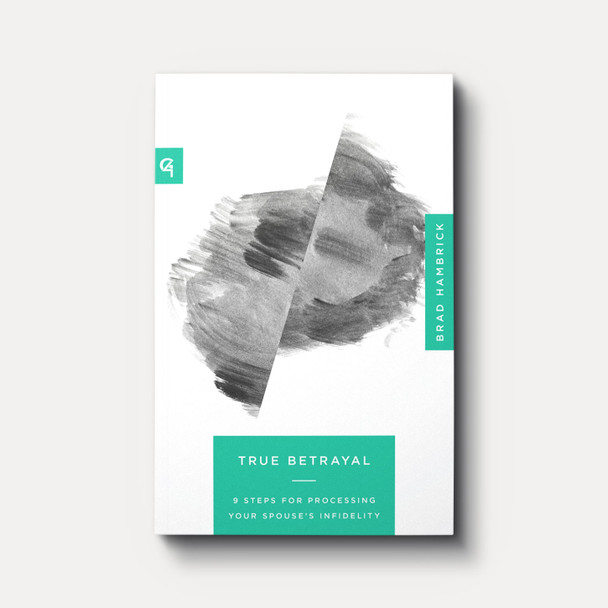
"True Betrayal: 9 Steps for Processing Your Spouse's Infidelity"
“True Betrayal” by counselor and pastor Brad Hambrick outlines a clear, compassionate, and biblical 9-step framework for processing and healing from your spouse’s sexual infidelity.
Finding out about your spouse’s sexual sin feels like a gut punch. In your overwhelming flood of emotions, you may feel like pretending like it never happened or you might think you need to take intense, immediate action. In the middle of your questions and pain, you need a safe, stable place to process what has happened and to take wise steps forward. Your spouse’s sexual sin is not your fault. Grief is going to be a major part of your healing journey, and the Lord is walking with you as you face what’s next.
This support group curriculum seeks to capture the gospel in slow motion and facilitates a safe environment for participants to grow together as they articulate their pain, grieve, and identify healthy ways to reengage with life and set realistic expectations for themselves and their spouse.
- 9-step model that helps participants process the intense suffering of a spouse’s infidelity with the hope of the gospel.
- An in-depth resource offers churches and individuals a unique opportunity to respond to the experience of infidelity in a faith-filled and healing way.
- A resource in the Church-Based Counseling series, built on the G4 model of subject-specific, lay-led counseling groups, designed to help churches create sustainable lay counseling ministries.