
A Centers Series: Serving Students Throughout the Writing Process
Mary Asta Mountain | November 12, 2025
“There can be something really lonely and isolating about writing,” said Olivia Rall, instructor of English at Judson College. “Ultimately, it’s something you do alone.”
The physical act of writing — putting pen to paper — she explained, is the work of a single person. When the ideas won’t form into words, Rall said, “You’re just alone with the page in front of you, thinking, ‘Why can’t I make this happen?’”
But for Rall, that doesn’t mean that the writing process can’t be collaborative.
In 2014, as a student at Judson College, Rall began working as a writing consultant at The Writing Center at Southeastern Seminary, a service offering appointments for all students at Southeastern, from freshmen in college to doctoral students approaching their dissertations.
“The Writing Center,” Rall described, “is a way to think about writing in community.”
The Writing Center is a way to think about writing in community.
Stepping into the Writing Center
Rall originally arrived on Southeastern’s campus in 2013 and enrolled in a Bachelor of Arts in English and Christian studies at Judson. Her experience as an English major at Judson both solidified her own love of the discipline and prompted her interest in teaching.
Rall first encountered the Writing Center as a student, seeking help on one of her papers. A variety of classes at Southeastern and Judson require students to visit the Writing Center with their drafts to receive feedback from one of the consultants. However, the center is also available for any student seeking assistance at any point 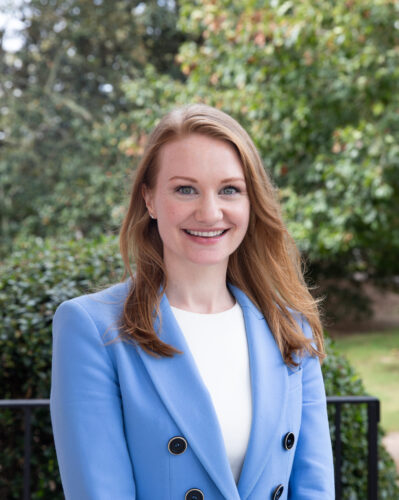 in a project, from brainstorming to the final product.
Established in 2009, the Writing Center operates under the supervision of John Burkett, associate professor of rhetoric and composition and the center’s founder and director.
Unlike Southeastern’s four equipping ministry centers, the Writing Center doesn’t serve in an outward facing capacity. Instead, it functions as an essential resource and aid for the Southeastern community, especially for those students knee-deep in the trenches of reading and writing.
Critical Thinking in Community
The Writing Center primarily employs current seminary and college students as its consultants. This method of peer tutoring not only provides consultants with teaching experience but also creates a unique environment for collaboration, feedback, and support for students.
Many students, Rall said, get stuck trying to write without a concrete audience, thinking, “Is this what my teacher wants?”
“It’s very different,” she explained, “from sitting down and having a consultant in front of you who understands the assignment. There’s less pressure than if it was your professor who assigned it or the person you know is grading it. Instead, you get to talk to a fellow student or peer.”
For Rall, the conversational element of a Writing Center appointment is particularly important.
Many students tend to view the Writing Center as an editing service or a place for final drafts. But, as Rall soon learned during her own time as a student and consultant, the center does much more than help students polish a paper. It teaches them critical thinking and communication in community.
As a consultant, Rall often saw students come into appointments simply needing to talk — even if they didn’t realize it.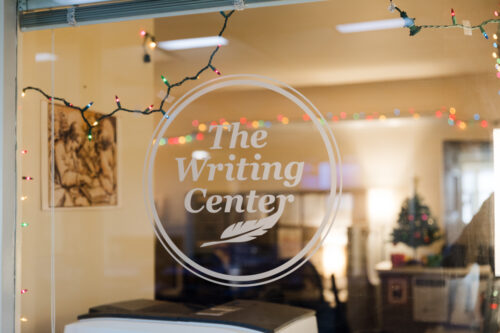
“They’d been thinking about their draft for a long time; they’d been trying to write it; and they’d been getting stuck in certain parts,” she recalled. The thing that routinely helped them, Rall said, was “narrating out loud, either ‘This is what I’m trying to say’ or ‘This is where I’ve been getting stuck.’”
While consultants are well-versed on the fine details of grammar, citations, and editing, they don’t edit students’ papers for them. Instead, they prioritize the long game, teaching students how to approach the research process, revise their first drafts, and craft compelling arguments.
While professors provide guidance and instruction in the classroom, Writing Center consultants walk alongside students during the creation process, helping them articulate their ideas and formulate strong critical thinking skills.
Learning to Articulate the Intuitive
As a consultant, Rall soon learned that the students weren’t the only ones benefiting from Writing Center appointments.
“There’s nothing like teaching something that forces you to learn it,” Rall expressed.
Before coming to Judson, Rall had a deep love for reading and writing, but her English classes furthered that love even more and prompted her to consider further education down the road.
She remembered considering pursuing a PhD in English literature for the first time — with the hopes of teaching at a college like Judson — and thinking, “‘I don’t even know if I want to admit this to anybody, because it seems so far-fetched.’”
Rall’s experience at the Writing Center began teaching her how to translate what she knew into instruction for others.
“Serving as a Writing Center consultant made me articulate many of the things that I’d been doing intuitively,” she explained. “That truly helped me as a student. But nothing prepared me for teaching composition as a graduate student like working in the Writing Center. You have to narrate the steps in writing; you can’t just tell students to figure it out and they’ll get it.”
Serving as a Writing Center consultant made me articulate many of the things that I’d been doing intuitively.
As her own professors were pouring into her, Rall was able to take what she was learning and, with the vocabulary she was learning in the Writing Center, turn around and pour into her fellow students.
Why Does It Matter?
Now, seven years after graduation and at the end of her PhD, Rall has returned to teach full-time at Judson on the English faculty. She works alongside her former director, Burkett, and sends her own students to the Writing Center during their writing process.
For Rall, good communication and critical thinking are skills that every college and seminary student should have.
“There’s so much that we assume we have fully thought out, but it’s not until you actually have to write it down that you confront all kinds of questions the process brings up,” Rall explained.
“The more you write, the more you realize what you think.”
The more you write, the more you realize what you think.
As students grow in their critical thinking, it’s essential that they learn how to communicate those thoughts — whether they are pursuing a Master of Divinity, a degree in counseling, or a doctorate.
“As Christians, we are people of the word,” Rall said. “And as people who believe the Bible is inerrant, that it’s inspired, that we get everything we need from it — of course writing is important. Language is important. The way we articulate the gospel is important.”
The Writing Center exists to equip students to do just that.
To learn more about Judson’s English degrees and be equipped as a critical thinker and communicator, visit judsoncollege.com/degrees.