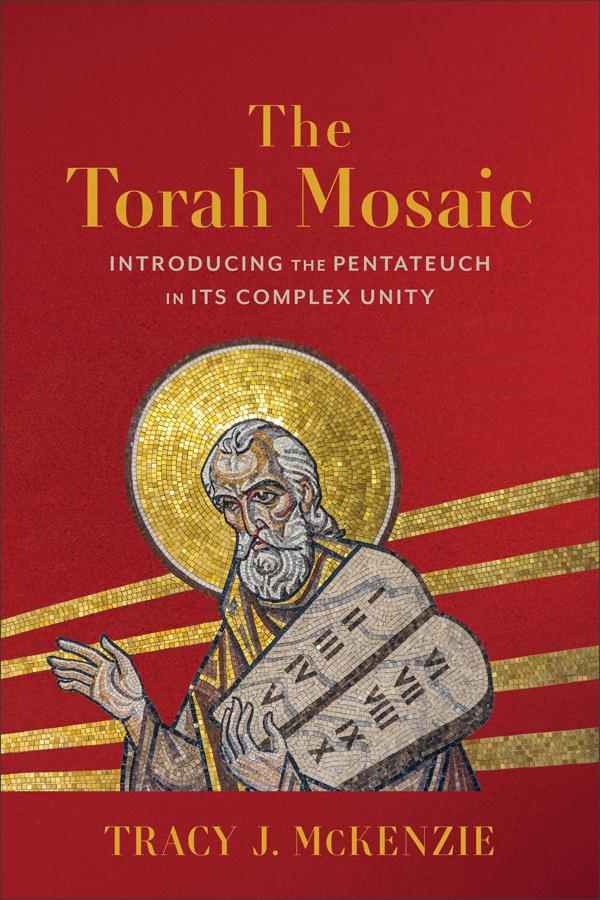
Beyond the Book with Dr. McKenzie: “The Torah Mosaic”
Mary Asta Mountain | December 30, 2025

How do the first five books of the Old Testament lay the foundation for the rest of Scripture with both complexity and unity? Tracy McKenzie explores this very question in his recent publication “The Torah Mosaic,” approaching the theology of the Pentateuch from a perspective that explores both the depth and detail of the author’s account while also highlighting the cohesive creation of the Pentateuch and its relationship to the rest of Scripture.
McKenzie, who serves as professor of Old Testament and Hebrew at Southeastern Seminary, takes some time in the following Q&A to answer a few questions about “The Torah Mosaic” and its contributions to the study of the Pentateuch.
What is the purpose of this book, and who is its audience?
The purpose of the book is twofold: First, it sharpens the way readers interpret the Old Testament. It does this by offering two chapters on interpretive methodology. Second, the remaining chapters use that methodology to work through the Pentateuch — basically case studies, explaining the meaning and theology of each major section in the Pentateuch.
“The Torah Mosaic” is written for anyone who is interested in understanding the Pentateuch and its theology. I have tried to make it as accessible as possible even though it is informed and grounded in an academic approach. So, whether you are a layperson, an incoming student, or someone from the academy, there should be something there for you.
How does this book uniquely contribute to the scholarly conversation around the Pentateuch?
This book uniquely combines a focus on the unity of the Pentateuch while not ignoring its complexity. Most books focus either on unity and ignore the diverse elements in the Pentateuch, or they focus on diversity while never showing how an author brought those pieces into a unifying whole. To put the matter another way, this book handles the actual complexity and diversity that make up the Torah, while demonstrating how an author brings the pieces together to generate a structured and meaningful text.
This book uniquely combines a focus on the unity of the Pentateuch while not ignoring its complexity.
What has surprised you most in your research and writing for this book?
I’ve taught this material for 20 years, but the Old Testament amazes me because every time I work through it I learn new things. For example, as I edited my writing on the messianic prophecy in Numbers 24 — even though I have worked through this section for a sermon and for the book, I noticed in a new way how that chapter incorporated royal imagery from Numbers 23. This demonstrated the author’s portrayal of YHWH as king when he brought Israel out of Egypt and now his portrayal of the messianic king as YHWH!
How do cultural lenses affect Western readers’ understanding of the Pentateuch and its literary composition?
I would articulate the question a bit differently. While each of us is culturally bound and therefore, conditioned by and limited to our modern perspective, continual exposure to the texts and genre of the Bible through various means (along with illumination by the Holy Spirit) can break through our finiteness to bring us closer to appropriate interpretation and response to God and his word. When we read and re-read a book, in this case the Pentateuch, we notice details that compel us to reconceptualize its meaning.
What is more, this process can be heightened when we learn from others who have studied a book or genre from the Hebrew text or even the book’s own cultural milieu. One of my goals in teaching is to help students get as close as possible to a conception of the book that matches that of the author.
What are some of the primary interpretive errors or assumptions readers tend to make when they approach these five books of the Bible?
Readers tend to treat these texts as merely historical documents or occasionally like an epistle. They therefore think that they have to supplement their reading with a great deal of historical information or other cultural assumptions. At other times, they immediately jump to application before the author has made his point. In either case, they make genre mistakes and wind up misinterpreting the Bible. Part of the purpose of this book is to inform readers how Old Testament authors “make” books. We tend to think that they just sat down and wrote them out in one or two sittings. And that understanding affects how we interpret the text. When readers find out that understanding is not correct, it opens up a new way of understanding the book’s production and therefore, its interpretation.
What role does the Pentateuch play in readers’ interpretation of the rest of Scripture?
This may seem like an overstatement, but the rest of Scripture is answering the issues that the first three chapters of Genesis have set up. And for certain, the remainder of the Pentateuch establishes the parameters for every aspect of theological inquiry. So, imagine trying to interpret the rest of the Bible and provide answers if you do not even understand the questions that the first book of inspired Scripture sets forth. That is basically what people who begin with the New Testament or with systematic theology try to do without the foundation of understanding the Pentateuch.
This may seem like an overstatement, but the rest of Scripture is answering the issues that the first three chapters of Genesis have set up.
How does “The Torah Mosaic” further equip readers to serve the church and fulfill the Great Commission?
The Pentateuch establishes who the Messianic King is, his purpose, his time frame, his people, and his place. For example, the very words of the Great Commission flow out of language that emerges in the Table of Nations from Genesis 11 and the promise to Abraham in Genesis 12. This is just one example of how material from the Pentateuch relates to the church.
How has researching and writing “The Torah Mosaic” encouraged you and shaped you spiritually?
This question is like the question to preachers who receive encouragement and conviction from preparation for Sunday morning sermons long before the congregation does. Writing this book was spiritually enriching and convicting because I was able to discern God’s purpose and plans for us, his people, in these last days. For example, what does the Pentateuch say will take place in “the last days?” Are we living in “the last days?” Is an ethic of marriage for men and women’s roles clearly taught in Genesis 1-3? Does God’s promise to Abraham have implications for whether I should live in Israel? Or whether I can be confident in my evangelism? Is the dual nature of Christ taught in the Pentateuch? These are just a few of the questions addressed in the Pentateuch and this book.
"The Torah Mosaic: Introducing the Pentateuch in Its Complex Unity"
The Pentateuch lays an important literary and theological foundation for the rest of Scripture, so it’s important that readers correctly understand its intended message. While seeing the Pentateuch’s unity, many Western readers miss its complexity and thus an aspect of its meaning. In this book, Tracy McKenzie unfolds the complex process of organization, development, and composition of these five books, which was done in a literary world different from our own. He emphasizes the composite unity of the Pentateuch while guiding readers through its discrete literary units.
This accessible and concise introduction models close reading of the text, observing elements such as genre, innerbiblical exegesis, unifying language, and literary features. McKenzie shows that it is appropriate to appreciate the Pentateuch’s complexity while maintaining faith in its unified message and divine authority. Each chapter concludes with relevant interpretive, theological, and practical insights. The aim is to sharpen readers’ powers of interpretation and to expand their comprehension of the Pentateuch’s message and theology, which the author suggests concerns God’s future people under his king’s reign and authority.
This supplemental textbook will be useful to students in Old Testament courses and will also appeal to pastors and church leaders.
November 11, 2025
Paperback, 216 pages